
 English
 русский
 فارسی
فارسی
The Ethylene Cracking Furnace is a high-performance industrial furnace designed for ethylene production via pyrolysis of hydrocarbons. The furnace delivers precise and uniform high-temperature heat re...
See Details Home / News / Industry News / EPC for Ethylene Cracking Furnace: Scope, Radiant Coils, and Marine Delivery
2026-10-16
Content
Two EPC bids for the same ethylene cracking furnace can sit 25 to 30 percent apart and still both be technically compliant. The difference is rarely the radiant coil alloy or the burner count. It is the battery limit: who supplies the convection section module, who welds the crossover duct, who owns the decoking valve skid, and who is standing on site when the first coil is hydrotested.
The conclusion first: on a cracking furnace EPC package, freezing the scope split and the interface matrix before commercial evaluation protects the schedule far more than shaving the furnace price. A two percent saving on the heater is easily erased by three weeks of unpriced site welding.
What follows is what the scope normally contains, where interfaces actually break, how cracking tubes and radiant coils should be specified, and what fabrication and shipping capability looks like on a project of this size.
An ethylene cracking furnace is a modest share of a plant's capital cost and a disproportionate share of its critical path. The radiant coil outlet temperature, residence time and decoking cycle set by the process licensor drive almost every mechanical detail, so the contractor's real job is converting a process package into a machine that can be fabricated, shipped and erected.
Scope language varies from project to project, which is exactly why the split should be tabulated rather than described in prose.
| Package | Typical content | Interface to freeze early |
|---|---|---|
| Radiant section | Centrifugally cast cracking tubes, return bends, inlet and outlet headers, burners, refractory, casing, observation doors | Coil alloy specification, tube-to-header welding and heat treatment, spring hanger loads |
| Convection section | Convection coil banks, extended-surface tubes, module steelwork, soot blowers, ducting | Module split for transport, expansion joints, duct tie-in at the stack |
| Transfer line exchanger | Quench exchanger, inlet cone, outlet piping, boiler feed water connections | Thermal movement allowance and licensor approval of the exchanger datasheet |
| Decoking system | Decoke valves, air and steam injection piping, control logic and interlocks | Tie-in with the licensor control philosophy and long-lead valve procurement |
| Structure and erection | Casing support steel, platforms, ladders, site welding, painting, insulation | Ship-loft versus site-weld decisions, and whether painting happens before or after erection |
Two rows in that table deserve emphasis. The convection section is increasingly delivered as pre-assembled modules, because site welding of extended-surface tubes is slow and hard to inspect properly; the module split therefore has to be agreed with the transport route before fabrication starts, not afterwards. The decoking system sits on the boundary between the licensor's control philosophy and the fabricator's supply, which makes it the most common source of late instrumentation changes.
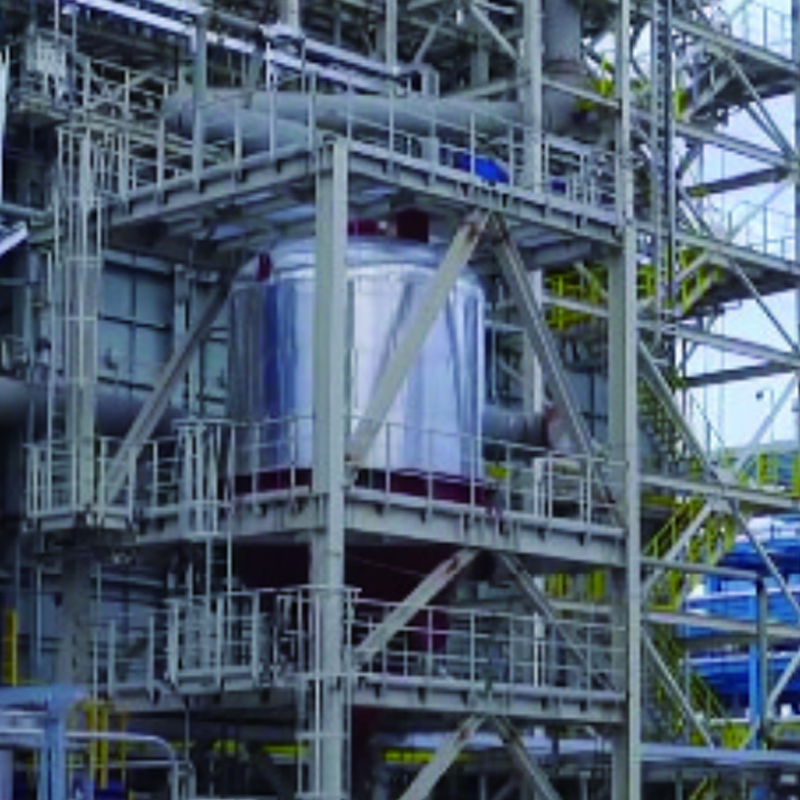 Ethylene Cracking Furnace for High-Temperature Hydrocarbon PyrolysisCustom furnace with optimized radiant and convection sections supports continuous ethylene production, flexible feedstocks, precise temperature control, and heat-transfer efficiency in petrochemical cracking units.View Product →
Across petrochemical and refining projects, delay tends to concentrate at the same three boundaries rather than spreading evenly across the schedule.
Naming responsibility for these three items in the technical annex is usually worth more than adding another inspection hold point.
Radiant coils live at the upper end of what cast alloys tolerate, in a carburising and oxidising atmosphere, with coke laying down on the inner surface between decoking cycles. Centrifugal castings in 25Cr/35Ni/Nb-modified grades are the working standard, and the specification details that matter are less about the grade name than about how it is controlled: casting route, wall thickness tolerance, straightness, ovality, and the transition where a cast tube meets a wrought fitting or an outlet header.
Wall thickness tolerance is normally written as a percentage rather than a fixed figure, because a thin tube and a heavy tube cannot share the same allowable deviation. Buyers should ask three questions before releasing a purchase order: is the tube centrifugally or statically cast, what are the acceptance limits for wall thickness and ovality, and how are the tube ends prepared and qualified for welding. The handling and installation side of the same subject is covered in the site's note on precautions for using radiation tubes, which is worth reading alongside the mill certificates.
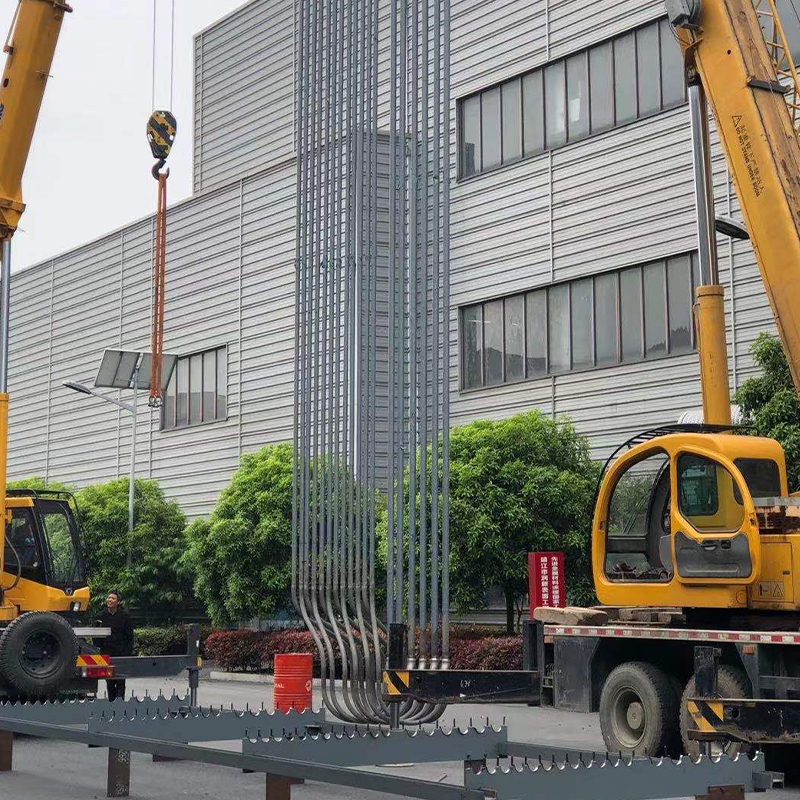 Custom Cracking Tubes and Radiant Coils for Ethylene FurnacesHigh-temperature alloy tubes support ethylene and propylene cracking with corrosion and coking resistance, helping buyers verify casting, wall thickness, and weld preparation.View Product →
Furnace work is heavy, and the shop floor constrains what can be pre-assembled. Tuopu Heavy Engineering operates a base of 40,000 square metres, of which 20,000 square metres forms a heavy equipment centre served by 150-tonne lifting capability, laser cutting machines, pipe cutting machines and automatic welding robots. A 3D printing centre supports rapid pattern and component work.
On export projects the berth matters as much as the shop. Tuopu Wharf runs 200 metres east to west at a water depth of 8 metres and a width of 50 metres, covering 18,000 square metres, with a maximum roll-on weight of 50,000 tonnes. The manufacturing base sits less than 200 metres from the roll-on berth, so a completed convection module or furnace section travels metres rather than kilometres before it reaches the ship.
As a first-tier supplier to Sinopec, CNPC and CNOOC and a qualified supplier to Sinochem Group, the company delivers heater EPC packages for petrochemical, coal chemical and refining clients, including overseas projects.
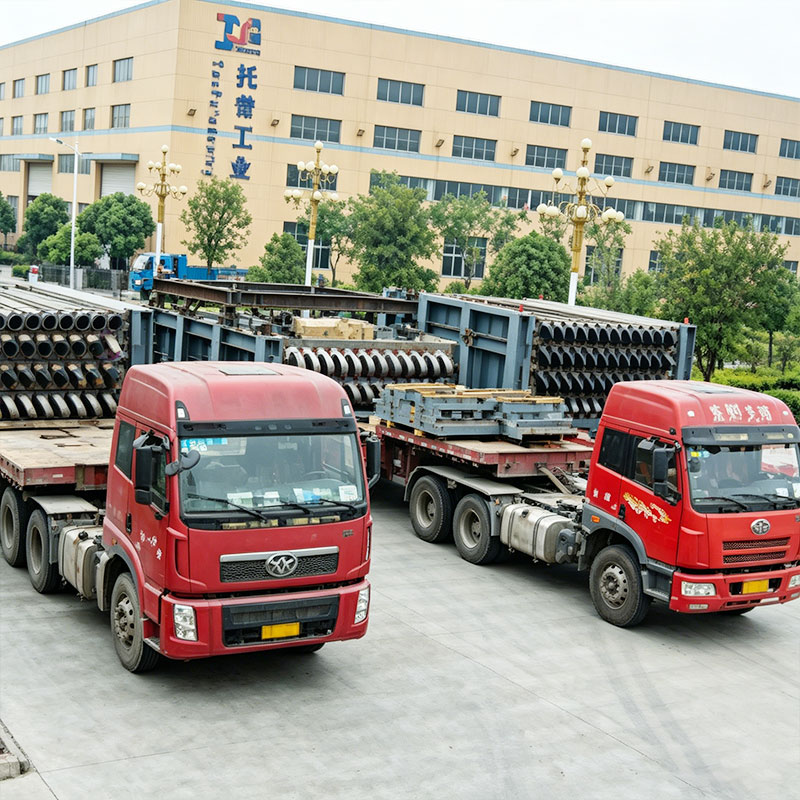 Convection and Radiant Section Modules for Industrial FurnacesModular heat-transfer components support petrochemical, coal chemical, and industrial furnace efficiency, with high-temperature alloys and customizable designs for easier installation and maintenance.View Product →
Before converting a technical bid into a purchase order, six items are worth a written answer rather than a verbal assurance.
If any of these answers is still open two weeks before award, it will be open again at site, this time with a crew standing by. Teams that prefer to close them earlier can discuss an ethylene cracking furnace EPC scope directly with the engineering group before the enquiry is issued.
The thermal guarantee normally remains with the process licensor or with the contractor acting under the licensor's design, while workmanship, dimensions and weld quality belong to the fabricator. A clean contract separates the two tests so that a missed temperature does not become an argument about ovality.
Yes, and it usually shortens the schedule. When the radiant coil and the furnace casing come from the same manufacturing base, tube-to-header welding, heat treatment and dimensional control stay under one quality system instead of being negotiated across two purchase orders.
It is split into transportable modules sized against the road permit envelope and the receiving port, then rolled onto a vessel from a berth adjacent to the fabrication shop. A wharf within a few hundred metres of the assembly hall removes the inland oversize transport leg, which is frequently the slowest and least predictable part of an export delivery.
An ethylene cracking furnace EPC package rewards early precision more than late negotiation. Draw the battery limit, name the owner of the three critical interfaces, specify the coil metallurgy and its tolerances, and confirm how the largest modules leave the shop and reach the berth. Everything after that is execution.
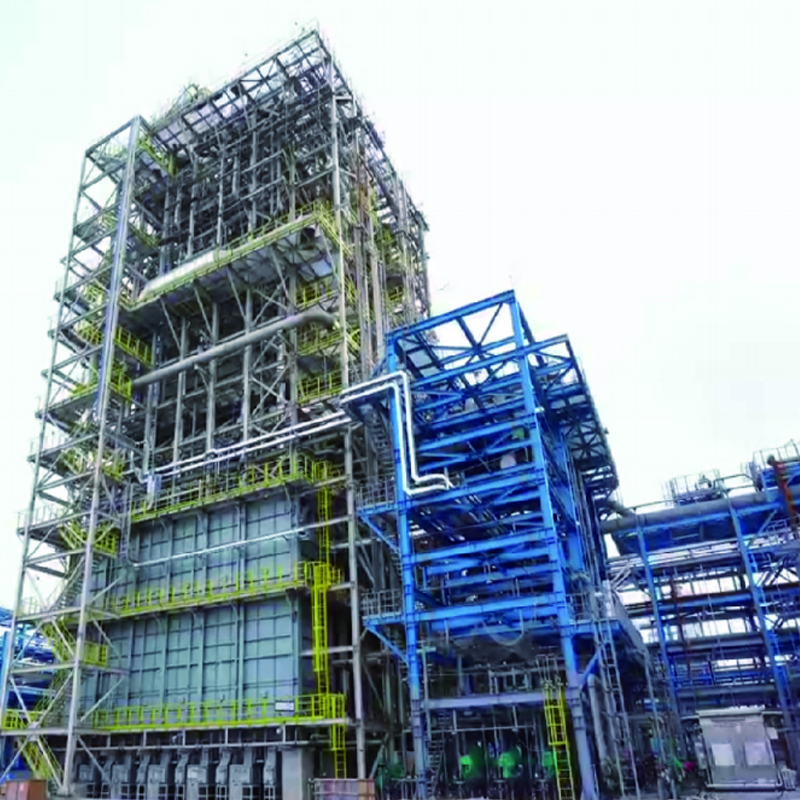
The Ethylene Cracking Furnace is a high-performance industrial furnace designed for ethylene production via pyrolysis of hydrocarbons. The furnace delivers precise and uniform high-temperature heat re...
See Details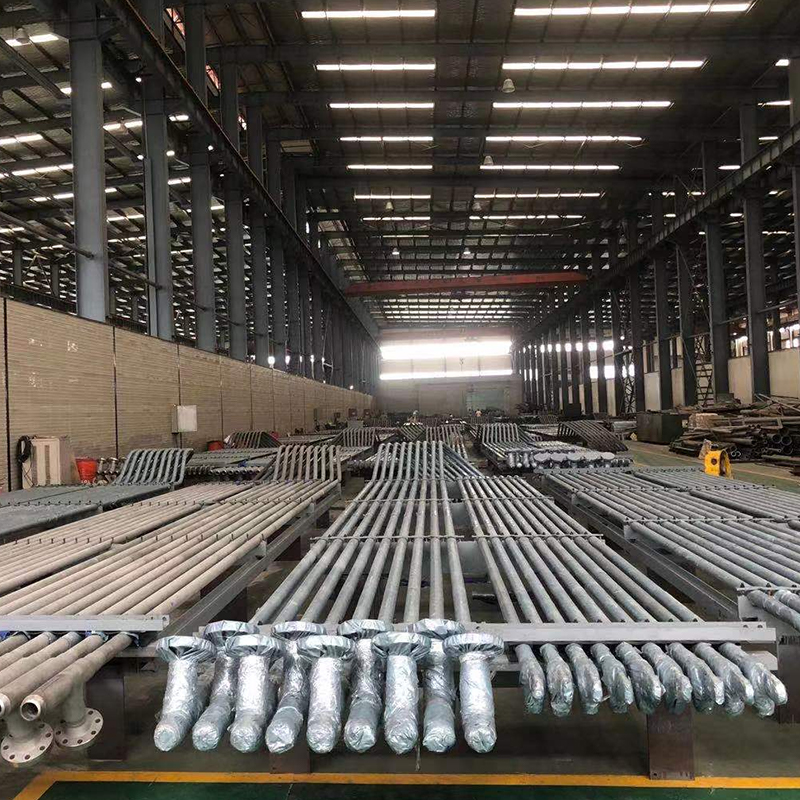
Cracking Tube Series is engineered for high-temperature cracking furnaces in the petrochemical industry, providing exceptional thermal stability, corrosion resistance, and long-term operational reliab...
See Details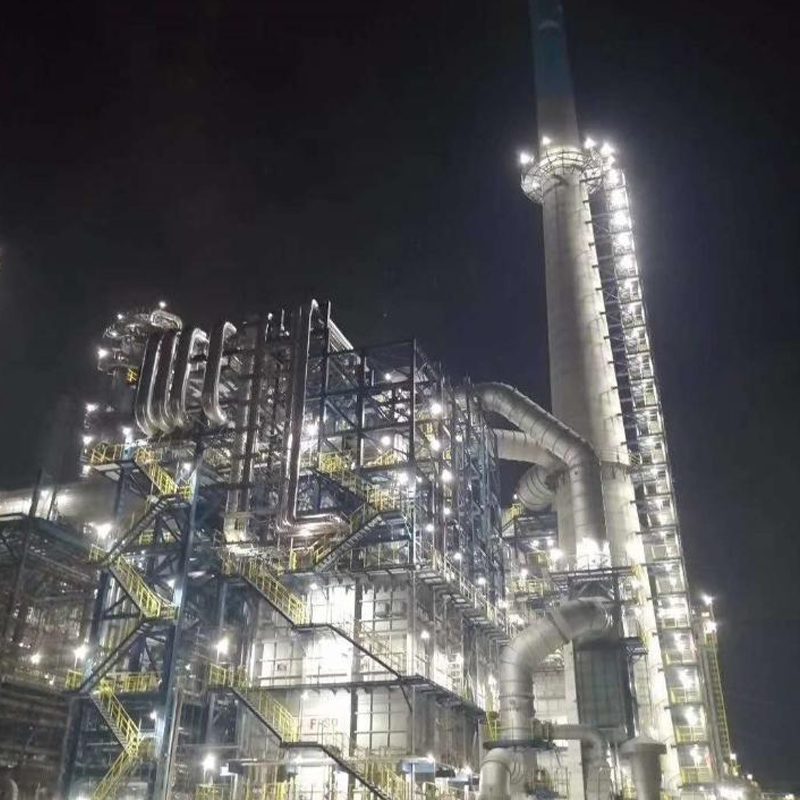
Our Fired heater for ADU and VDU is engineered for reliable and efficient heating of crude oil in both atmospheric and vacuum distillation processes. Designed for high thermal efficiency and uniform t...
See Details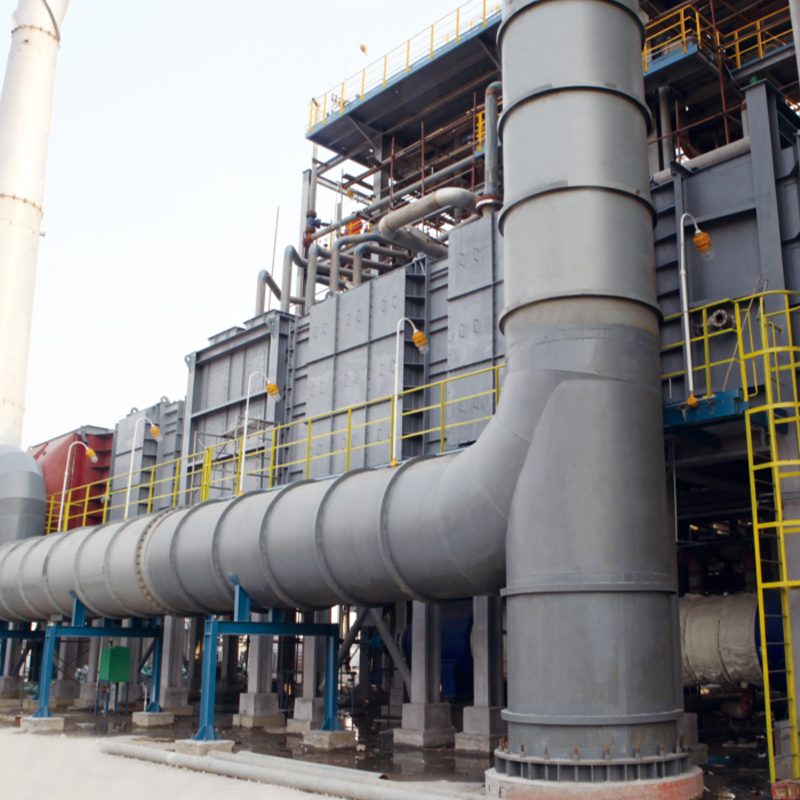
Furnace Accessories Series provides essential components that ensure the safe, efficient, and reliable operation of industrial furnaces. From burners and thermocouples to refractory supports and flue ...
See Details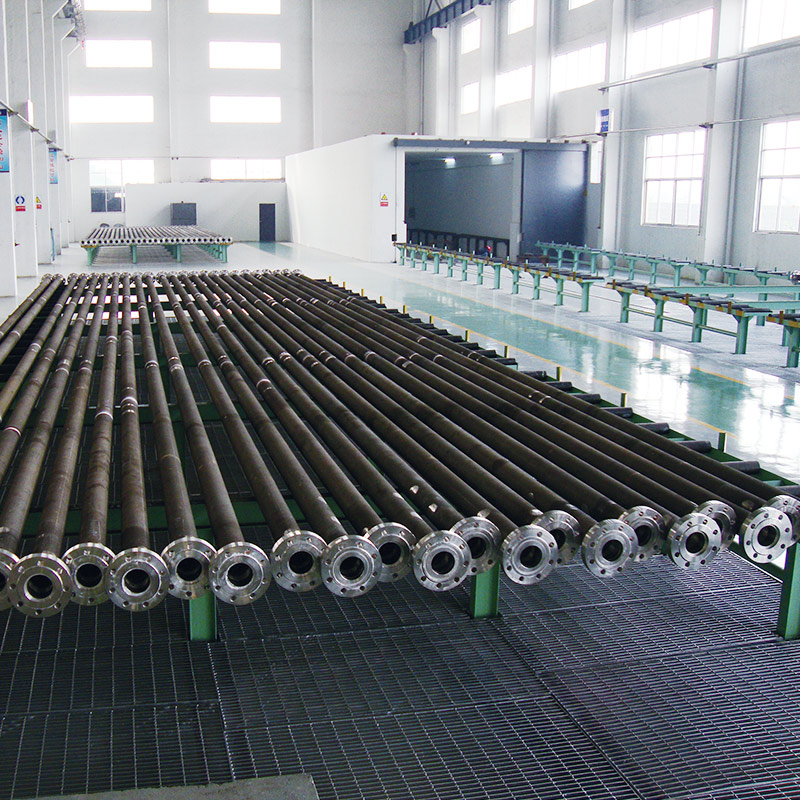
Tuopu’s Reformer Tube is designed for high-temperature chemical reactions in industrial furnaces, ensuring efficient heat transfer, structural integrity, and long-term operational stability. These tub...
See Details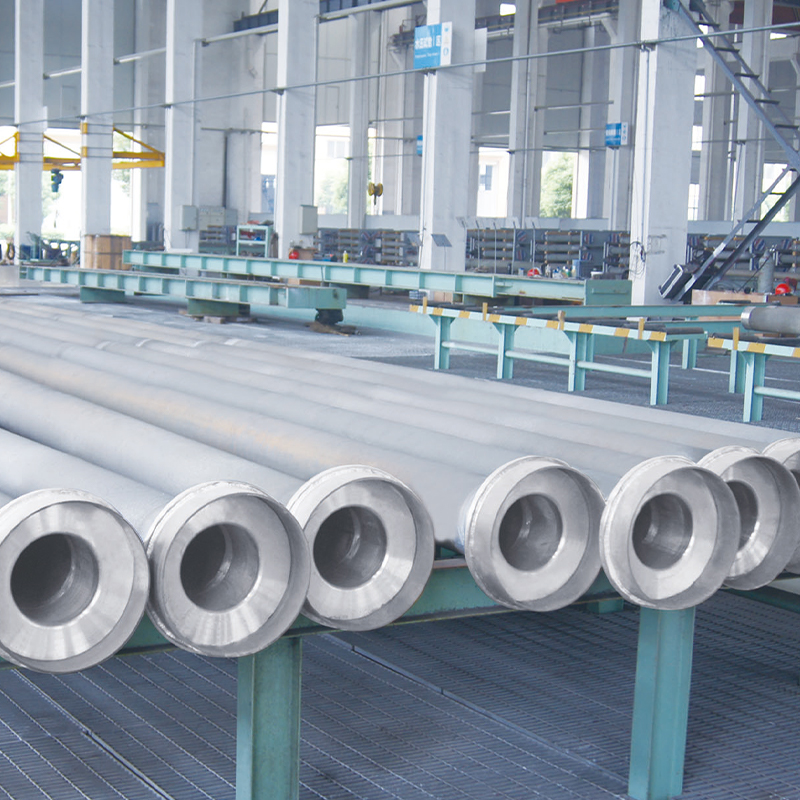
Tuopu’s DRI Furnace Tube Series is specially designed for Direct Reduced Iron (DRI) furnaces, offering superior heat resistance, mechanical strength, and long-term operational stability. Manufactured ...
See DetailsPhone
+86 189 5262 7611
+86-(0)523 8498 2299
Address
No.20, Fuyang Road, Jingjiang City, Jiangsu Province, China
Media